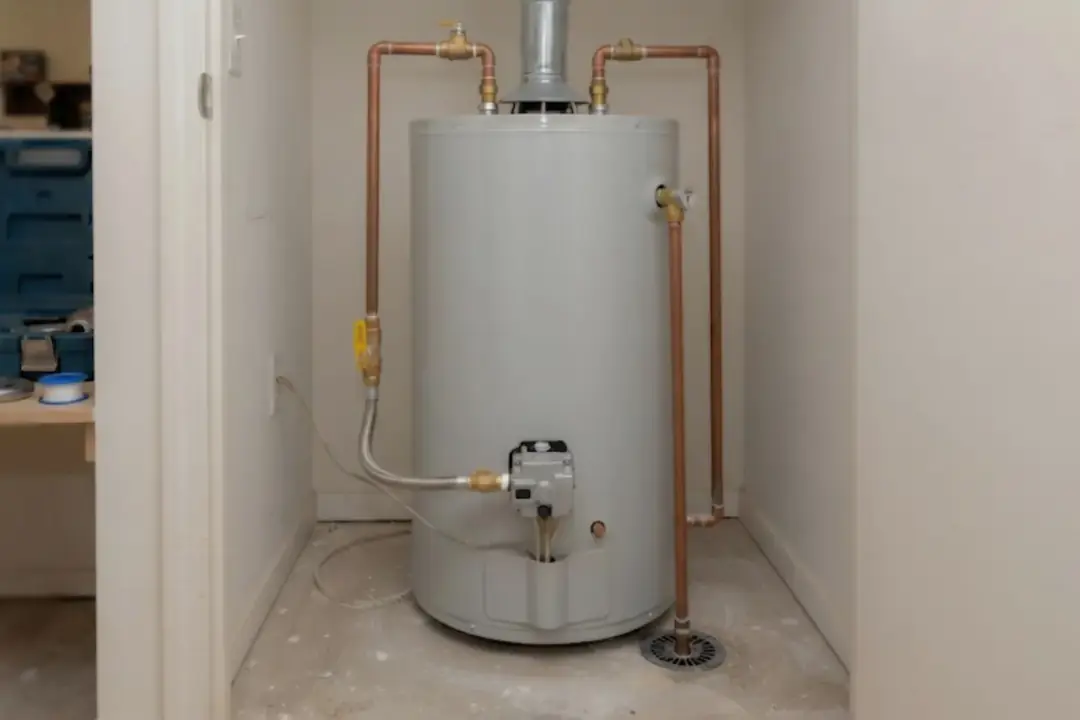
What the job involves
A replacement starts with shutting off the gas and water, draining the old tank and disconnecting the gas line, vent and water lines. The new unit goes on a drain pan, and each connection is made in reverse. Then comes the part that cannot be skipped, testing.
That test includes a check for gas leaks at every joint, a check that the burner lights and burns properly and a check that exhaust is leaving the house through the vent. If you are still deciding between replacement and fixing the unit, read about water heater repair first.
Safety rules for a gas heater swap
- Shut off the gas at the appliance valve before touching anything.
- Test every gas joint for leaks with approved solution, never a flame.
- Confirm the vent slopes up and is sealed at each joint.
- Install or check carbon monoxide alarms before the job ends.
Venting and combustion air
A gas water heater makes carbon monoxide as a byproduct, and the vent carries it outdoors. If the vent is blocked, leaking or pulled backward, exhaust can enter the house. A new heater is a good time to inspect the whole vent run for rust, gaps or a poor slope.
Combustion air matters too. The burner needs air to burn cleanly, and a heater in a tight closet may need an opening or a vent. A replacement should never be a match-the-old-one guess, especially if the original install was done decades ago.
| Part | What to check | Warning sign |
|---|---|---|
| Vent pipe | Slope, joints, rust | Soot or rust streaks. |
| Draft hood or intake | Clear and secure | Backdraft or scorch marks. |
| Gas connector | Material, length, leak test | Gas smell. |
| Relief valve | Discharge pipe in place | Capped or missing line. |
| Drain pan | Present and draining | Rust stains. |
Thinking of doing it yourself? Call first and let us tell you what the permit and gas steps involve.
Call (301) 936-0389Warning signs it is time to replace
Many owners wait until a gas water heater leaks. The signs come earlier. Rust-colored hot water, a tank that rumbles, a burner that sounds loud or sooty, repeated pilot trouble and moisture at the base all suggest the unit is aging. A tank over a decade old is worth planning for even if it still works.
Replacing on your schedule beats replacing in an emergency. You choose the size, the efficiency and the time of day, and you do not pay for a flooded floor. The serial number on the label encodes the manufacture date, and a plumber can read it in seconds.
- Look for rust at the base, the vent and the gas connection.
- Check the age on the serial label.
- Note whether hot water runs out sooner than it used to.
- Listen for popping from sediment in the tank.
What a good estimate includes
A written quote should list the unit, its size and efficiency, the venting work, the gas connection, the relief valve and discharge pipe, the drain pan, haul-away of the old tank and any permit steps. If the quote leaves something out, ask. The cheapest bid that skips the venting check is rarely the cheapest job.
Disposing of the old tank
An old tank is heavy and full of sediment, so it should not go out with the trash. Many plumbers haul it away and take it to a metal recycler as part of the job. If you remove it yourself, drain it fully, cap the gas line properly and check with the county on disposal rules before moving it.
Choosing the new unit
Size by household use, not by the old tank's number. A 40 gallon tank is common, and a 50 gallon unit suits a bigger family. High-efficiency condensing models need a different vent, a condensate drain and often a power connection. If you want a high-efficiency model, ask early so the venting is planned.
Ask what to expect before work begins.
Gas work and inspections in Montgomery County
WSSC Water is the plumbing and fuel gas inspection agency for Montgomery and Prince George's counties and has its own Plumbing and Fuel Gas Code. The county's permit page lists plumbing under WSSC.
We do not state code details from memory, so confirm with WSSC Water what permit your swap needs. If a gas smell appears at any point, leave the house and call the gas utility or 911 from outside.
Source type: WSSC Water plumbing and fuel gas guidance and Montgomery County permit guidance
For nearby coverage, see our North Bethesda page and Derwood page.
Where this comes from. According to Montgomery County's permit guidance, plumbing permits are handled through WSSC Water, which has its own Plumbing and Fuel Gas Code. Check with WSSC Water for what your job needs, because rules change. Gas appliance requirements also come from the manufacturer's installation instructions.
Questions homeowners ask
It involves gas, water and venting. Many owners hire a plumber because mistakes risk leaks and carbon monoxide.
Plumbing and fuel gas work is inspected through WSSC Water. Ask WSSC what your swap requires.
A standard swap often takes a few hours once the new unit is on site. Vent changes take longer.
Yes, test them and replace them on schedule. Install at least one near sleeping areas.