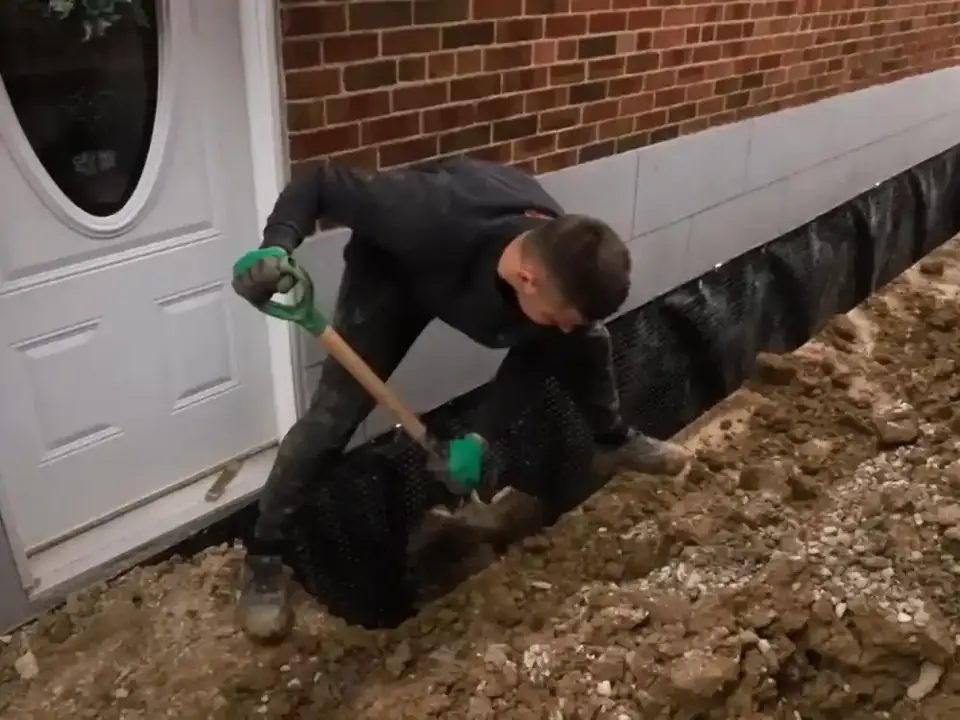
What exterior waterproofing actually is
The work starts with excavation along the outside of the foundation wall, down to the footing. The wall is cleaned, cracks are repaired and a waterproof membrane or coating is applied. A drain pipe sits beside the footing, surrounded by gravel, to carry water away. Then the trench is backfilled.
That is a big job, and it needs access. Decks, patios, porches and landscaping are in the way, and many of them have to be removed and replaced. The reward is stopping water outside the wall, where it can do no harm. For smaller projects, see our basement waterproofing page.
| Approach | How it works | Best for | Watch for |
|---|---|---|---|
| Exterior membrane and drain | Seals wall and drains footing | Active wall seepage, repeated flooding | High disruption and cost. |
| Interior drain and sump | Collects water inside and pumps out | Floor-level seepage | Does not stop water at the wall. |
| Grading and gutters | Directs surface water away | Water from roof or yard runoff | Does nothing for groundwater. |
| Crack injection | Seals a single crack | Isolated crack | Not a whole-wall fix. |
Not sure which approach fits? Call and we will help you rule out pipes first.
Call (301) 936-0389Signs the problem is at the wall
Water that enters through the wall, not the floor, points to exterior trouble. Look for horizontal cracks, a damp band on the wall at the same height all around, efflorescence and staining that begins well above the floor. Water at the wall-floor joint usually means groundwater is rising against the footing.
Window wells that fill and leak, downspouts that empty beside the house and soil that slopes toward the foundation all deliver water to the wall. Fixing those first is cheap and sometimes enough, so treat them as the first step, not an afterthought.
- Photograph the wet area on a dry day and again after rain.
- Check that gutters are clear and downspouts discharge well away from the house.
- Look for settled soil near the foundation that now slopes inward.
- Mark crack lengths with a pencil to see whether they grow.
Weighing the disruption
Exterior work means heavy equipment in the yard, open trenches for days and later regrading and reseeding. If a deck or patio sits against the foundation, it may need to come out. Ask the contractor about timing, protection for plantings and what happens in a storm while the trench is open.
Keeping the finished work dry
After exterior work, the yard has to keep carrying water away. Keep the regraded slope intact, clear gutters, extend downspouts and avoid planting beds that hold water against the wall. A yearly look at the trench area and the drain outlet tells you early whether the system is still moving water.
Cheaper fixes to try first
- Extend downspouts several feet from the foundation.
- Clean gutters and check that they are not overflowing at the corners.
- Regrade soil so it slopes away from the house.
- Seal visible window well gaps and keep the wells clear.
Many wet basements are really surface water problems. If water appears after rain and not between storms, start outside the house. If it appears all the time, check supply lines with leak detection before assuming groundwater.
Where a plumber fits in
Exterior waterproofing is mainly excavation and sealing, which is separate trade work. Plumbers handle the connected parts, the sump pit and pump, the discharge line and any interior drain. If the plan includes a sump, see sump pump repair for how the pump side is handled.
We will tell you honestly when a job belongs with a waterproofing contractor. A plumber should not sell excavation work they do not do, and a waterproofer should not sell a pump they cannot service.
Permits, municipalities and discharge
Montgomery County's permit guidance advises residents who live in a municipality or HOA to check local regulations, and it lists plumbing permits under WSSC Water. Rockville is a municipality, so ask the city and your HOA about excavation and any changes to grading before work starts.
WSSC also prohibits storm and ground water in the sanitary sewer, so drain tile and sump discharge must go outdoors. We do not state permit rules from memory and confirm them for each job.
Source type: Montgomery County permit guidance and WSSC discharge guidance
Rock Creek, Cabin John Creek and Watts Branch run through and around Rockville, and homes near them may see more groundwater. Our Aspen Hill page and Derwood page cover homes near low ground.
Where this comes from. According to Montgomery County's permit guidance, residents of a municipality or HOA should check those local rules. WSSC Water lists storm water and ground water as prohibited sewer discharges.
Questions homeowners ask
It stops water at the wall, so it is more thorough, but it is also costlier and more disruptive. Interior systems manage water that has already entered.
Often a sump still helps. Many systems include both so that water has a place to go.
Rockville is a municipality, so ask the city and your HOA. Montgomery County advises residents in municipalities to check local rules.
Plumbers handle the pump, discharge and interior drains. The excavation and wall sealing are typically a waterproofing contractor's work.