The signs, from mild to serious
| What you see | What it means | What to do |
|---|---|---|
| Water drains slowly after a flush | Partial blockage in the trap | Plunge with a flange plunger. |
| Bowl fills almost to the rim and stalls | Full blockage in the trap | Plunge, then use a closet auger. |
| Bubbles or gurgling in the bowl | Air trapped by a blockage | Check other drains. |
| Water rises in the tub or shower when you flush | Blockage in the branch or main drain | Stop using water and call a plumber. |
| Water at the base of the toilet | Failed seal or overflow | Shut the valve and check for a leak. |
A single toilet that is slow, with every other fixture fine, almost always has a local clog. The cause is typically too much paper, a toy or wipes sold as flushable. A flange plunger, which has the extra rubber collar, seals better than a flat sink plunger.
What to try before calling
- Stop flushing and close the shutoff valve if the bowl is near the rim.
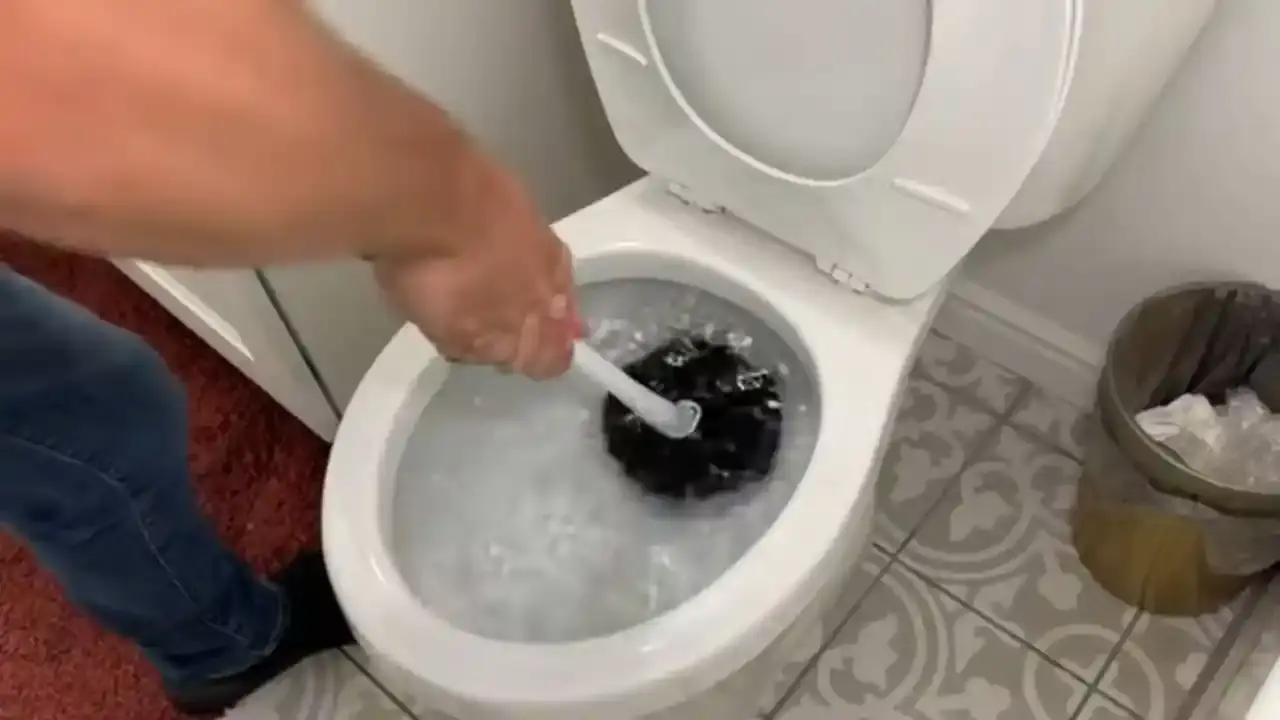
- Put on gloves and use a flange plunger with firm, steady strokes, keeping the seal.
- If it clears, flush once and watch the water level.
- If it does not clear after several tries, use a closet auger, which reaches the trap without scratching the porcelain.
- If another fixture backs up as well, stop and call a plumber.
Avoid chemical cleaners. They sit in standing water, can splash back and make it unsafe for the plumber who clears it next. For deeper causes our toilet repair page explains what we fix, from clogs to leaks at the base.
Toilet will not clear? Call to ask about availability and timing.
Call (301) 936-0389Prevention habits
Most toilet clogs are avoidable. Use a moderate amount of toilet paper, flush more than once for heavy use and never flush anything else. Even products that say flushable do not break down like paper, and they gather at bends in the pipe.
If a toilet clogs often, consider the age and type. A toilet from the early low-flow era may need a stronger flush, and a modern high-efficiency model may do better. The trap shape also matters, and a plumber can tell whether your toilet is the problem or simply a victim of what goes down it.
- Keep a flange plunger and a closet auger under the sink.
- Teach children that only paper goes in the toilet.
- Add a small trash can with a lid beside the toilet.
- Call a plumber if the same toilet clogs more than once a month.
How to use a closet auger
A closet auger is a short cable with a curved guide that protects the porcelain. Feed it into the bowl until it meets resistance, crank the handle to hook or break up the clog and pull back. Flush once to test. If the auger passes freely and the toilet still flushes poorly, the blockage is farther down, and a plumber should check the line.
Children, pets and small objects
Toys, brushes and cell phones end up in toilets more often than you would think. If something solid went in, do not flush again. A plunger can push it deeper and make it harder to retrieve. Turn off the supply, take photos and call a plumber, who can often pull the item from the bowl or remove the toilet to reach it.
When it is not just the toilet
If the tub or a basement floor drain responds when you flush, the blockage is past the toilet, in the branch line or the main. That is not a toilet problem and plunging will not help. A cable or a camera is needed, and drain cleaning is the next step.
Repeat clogs in the same toilet suggest a partial obstruction in the trap or just beyond it. Older low-flow models from the early 1990s can also flush poorly, and replacing the toilet may be cheaper than repeated clearing.
If the main line is involved
WSSC Water explains that for a sewer backup the owner is responsible for the pipe from the property line to the building, while WSSC maintains its main and the connection and clears its own section for free. WSSC runs a 24-hour sewer backup emergency line, which you can find on its website.
If more than one fixture backs up and neighbors have the same issue, tell the plumber, since it can point to the main. We help you document the problem either way.
Source type: WSSC Water sewer backup guidance
For nearby coverage, see our North Bethesda page and Potomac page.
Where this comes from. According to WSSC Water's sewer backup guidance, the owner is responsible for the pipe from the property line to the building, and WSSC maintains its main and the connection.
Questions homeowners ask
The bowl fills high, drains slowly or stalls and gurgles. Water rising toward the rim means stop flushing.
It can be if water is overflowing or other fixtures are backing up. Close the shutoff and call.
A flange plunger works better on toilets because it seals the drain opening.
A plumber can check your side. WSSC maintains the main in its service area and runs a 24-hour backup line.